 Kangjian
What Is the Best China Aluminum Rect Tube Supplier?
Choosing the best China Aluminum Rect Tube supplier is not simply a price comparison. It requires practical judgment, technical knowledge, and careful verification. A buyer may receive bright samples, quick replies, and an attractive quotation. Yet the production details may remain unclear. What alloy was used? Was the tube extruded under stable temperature control? Were wall thickness, corner radius, and straightness checked?
Dr. J. Gilbert Kaufman, a respected aluminum metallurgy author, expressed a useful principle: “Material performance begins with disciplined control of composition, processing, and inspection.” This idea applies directly to rectangular aluminum tubing. A dependable supplier should provide clear alloy and temper information, dimensional tolerances, mill certificates, and inspection records. Traceability matters.
Look beyond polished websites.
Strong suppliers usually explain their extrusion capacity, die development process, surface treatment options, packaging method, and production lead time. They should also answer practical questions about 6061-T6, 6063-T5, custom sizes, anodizing thickness, and minimum order quantities. Photographs of bundled tubes can reveal useful details, including protective film, edge condition, and pallet stability.
Still, no supplier is perfect. I have seen buyers focus too heavily on unit price and overlook inconsistent wall thickness. That mistake can create welding delays, weak joints, or costly rework. A better evaluation combines samples, factory evidence, third-party inspection, and honest communication.
The best choice is not always the largest manufacturer. It is the supplier that repeatedly delivers the required Aluminum Rect Tube quality, documentation, and service without hiding inconvenient details. Reliability should be proven before the purchase becomes urgent.
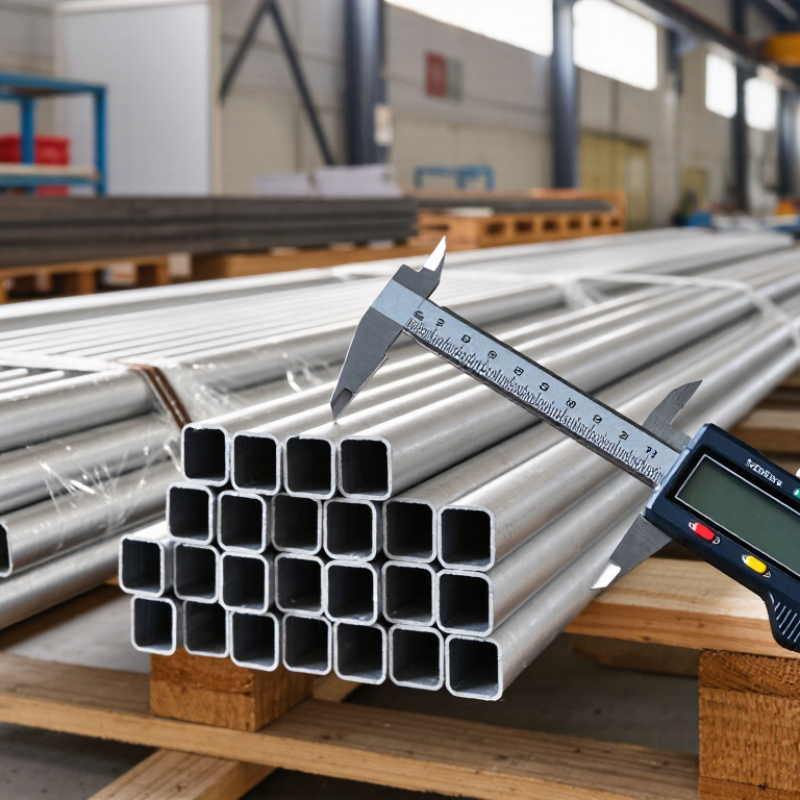
A China aluminum rectangular tube supplier is more than a factory listing. It is a manufacturer or exporter that converts aluminum billet into rectangular profiles. A reliable supplier should explain alloy, temper, dimensions, wall thickness, tolerance, and surface finish. Common choices include 6061-T6 for strength and 6063-T5 for extrusion quality. The application must decide the grade.
Industry scale matters. The International Aluminium Institute reported global primary aluminum production near 70.6 million tonnes in 2023. China contributed about 41 million tonnes that year. The U.S. Geological Survey’s Mineral Commodity Summaries 2024 reported similar figures. This capacity can support custom dies, repeated production, and competitive lead times. Capacity alone is not proof of quality.
Look for an extrusion press, controlled aging, straightening, cutting, and inspection equipment. Ask for mill test certificates, dimensional records, tensile results, and surface samples. Tolerance claims should match recognized standards, not only a sales sheet. Packaging also matters. Thin-walled tubes can arrive with crushed corners after a long shipment.
No checklist is perfect. In practical sourcing reviews, a polished catalog can hide weak traceability. Request a trial order before approving large volumes. Confirm alloy chemistry, hardness, corner radius, and actual length on received samples. A dependable supplier answers technical questions clearly, records deviations, and admits when a requested tolerance is unrealistic.
| Evaluation Dimension | Typical Industry Benchmark | What to Verify Before Ordering | Importance |
|---|---|---|---|
| Product Definition | An aluminum rectangular tube is an extruded hollow profile with a rectangular outside shape and either a rectangular or square internal opening. | Confirm the outside dimensions, wall thickness, corner radius, internal dimensions, cross-section drawing, and dimensional tolerances. | Essential |
| Common Alloy Options | 6063 is commonly selected for surface appearance and extrusion performance. 6061 and 6082 are commonly selected when higher structural strength is required. | Check the alloy designation on the quotation, inspection report, and material certificate. Do not accept an unspecified “6063 series” description when a specific alloy is required. | Essential |
| Temper Selection | T5 is commonly associated with extrusion products cooled after extrusion and artificially aged. T6 generally provides higher strength through solution heat treatment and artificial aging. | Match the proposed temper with the required mechanical properties and intended use. Confirm whether the supplied temper is included in the applicable product standard. | Essential |
| Manufacturing Process | Most aluminum rectangular tubes are produced by direct extrusion through a shaped die, followed by cutting, straightening, aging, and inspection. | Ask whether the profile is manufactured with a porthole or bridge die, whether a hollow-section weld line is present, and how weld-line quality is controlled. | High |
| Dimensional Capability | Commercial dimensions vary by alloy, wall thickness, profile complexity, press capacity, and die design. Tolerances should be agreed using a recognized standard or approved drawing. | Request a die feasibility review and a dimensional inspection report covering width, height, wall thickness, straightness, twist, and cut length. | Essential |
| Applicable Standards | Common reference standards include ASTM B221 for extruded aluminum products and EN 755 for extruded aluminum and aluminum alloy profiles. | Specify the exact edition and standard in the purchase order. Ensure chemical composition, mechanical properties, tolerances, and test methods are linked to that standard. | Essential |
| Mechanical Properties | Yield strength, tensile strength, and elongation depend on alloy, temper, wall thickness, and applicable standard. Higher strength is not automatically achieved by using a thicker decorative finish. | Require a material test certificate or inspection certificate containing heat or batch identification and measured mechanical-property results. | Essential |
| Surface Finishes | Common finishes include mill finish, anodizing, powder coating, and liquid painting. Finish durability depends on pretreatment, coating thickness, curing, and service environment. | Confirm finish type, color reference, gloss level, coating or anodic-layer thickness, surface class, masking requirements, and acceptable visual limits. | High |
| Cutting and Secondary Processing | Typical services include fixed-length cutting, deburring, drilling, punching, CNC machining, notching, bending, and assembly. | Approve machining drawings, dimensional tolerances, burr limits, hole-position tolerances, packaging method, and first-article samples before mass production. | High |
| Quality Documentation | A complete quality package may include a chemical composition report, mechanical test results, dimensional inspection report, surface-finish report, and packing list. | Check that documents identify the alloy, temper, production batch, inspection date, test method, measured values, and authorized approval. | Essential |
| Sampling and Inspection | Inspection may include visual examination, dimensional measurement, alloy verification, hardness testing, coating-thickness measurement, and functional checks for machined parts. | Define the sampling plan, acceptance criteria, inspection equipment, and responsibility for pre-shipment inspection in the purchase contract. | Essential |
| Minimum Order Quantity | Custom extrusion orders may involve die charges and production minimums. Minimum quantities vary according to profile size, alloy, finish, and processing requirements. | Request separate pricing for tooling, samples, trial production, standard production quantity, and repeat orders. Confirm whether unused material is chargeable. | High |
| Tooling and Sample Approval | A custom rectangular tube normally requires a dedicated extrusion die. A trial sample should be approved before regular production. | Clarify die ownership, storage period, maintenance responsibility, modification charges, sample quantity, and approval procedure. | Essential |
| Packaging and Protection | Long aluminum profiles are commonly protected with separators, wrapping, end protection, bundles, pallets, or suitable export packaging. | Confirm protection against scratches, moisture, deformation, contamination, and movement during handling and sea or land transportation. | High |
| Lead-Time Planning | Custom orders generally require time for quotation, die design, die production, extrusion trials, sample approval, finishing, inspection, and shipment. | Obtain a milestone schedule instead of a single delivery estimate. Separate tooling lead time, sample lead time, production lead time, and transit time. | High |
| Supplier Selection Principle | The best supplier is the one that consistently meets the required alloy, temper, dimensions, finish, documentation, delivery schedule, and total landed cost. | Compare suppliers using the same technical specification, sample approval process, quality requirements, delivery terms, and corrective-action expectations. | Essential |
The supplier converts aluminum billet into rectangular profiles. It should explain alloy, temper, dimensions, wall thickness, tolerance, and finish.
Alloy 6061 often suits higher mechanical demands. Alloy 6063 may suit appearance-focused extrusion projects. The temper still changes performance.
Request heat numbers, alloy chemistry, temper records, and inspection reports. Check several points, including corners and wall thickness. One perfect sample proves little.
Ask for material certificates, dimensional records, hardness results, and strength data. Records should match the actual production batch. Do not rely on a polished catalog alone.
Compare outside size, wall thickness, corner radius, straightness, and cut length. A 50 × 25 millimeter tube may have different tolerances between suppliers.
Anodizing, powder coating, and mill finish affect appearance, protection, and final dimensions. Thin walls can suffer crushed corners during long transport. Packaging is easy to underestimate.
Yes, request samples from different production batches. Measure actual length, hardness, wall thickness, and corner consistency. A trial order reduces costly surprises.
Review production capacity, tooling availability, delivery records, and corrective-action responses. Ask what happens after a failed inspection. Vague answers deserve caution.
Not reliably. Low pricing may hide weak traceability or inconsistent tolerances. I once focused too heavily on price and paid for extra machining.
Include alloy, temper, dimensions, tolerances, corner radius, finish, quantity, and acceptance criteria. Clear drawings prevent expensive misunderstandings. Assumptions still need questioning.
Choosing the best China Aluminum Rect Tube supplier requires more than comparing prices. A reliable supplier should offer consistent production capacity, clear communication, stable delivery schedules, and a proven understanding of international customer requirements. Buyers should evaluate the supplier’s experience, factory capabilities, material sourcing, and ability to provide customized sizes, wall thicknesses, alloys, finishes, and cutting services. Comparing detailed specifications is essential because strength, weight, corrosion resistance, dimensional tolerance, and surface quality can significantly affect a project’s performance and cost.
Manufacturing standards, product certifications, inspection procedures, and quality-control documentation also help confirm supplier reliability. Before placing an order, request samples, technical data, testing reports, packaging details, and production timelines. The right supplier should be able to support both trial orders and long-term production while maintaining consistent quality. By balancing technical suitability, certification, communication, service, lead time, and total cost, project managers can select an Aluminum Rect Tube supplier that matches their application requirements and provides dependable value.
