 Kangjian
Choosing an aluminum alloy is not a matter of picking the strongest number on a chart. The right choice depends on what the part must withstand, how it will be made, and where it will operate. A lightweight bicycle frame, a salt-exposed railing, and a machined equipment housing place different demands on the metal. Alloy And Aluminum selection starts with those real conditions, not a familiar grade name.
Materials-selection scholar Michael F. Ashby’s work supports a practical principle: match material properties to the design’s actual requirements. That means weighing strength, corrosion resistance, formability, weldability, machinability, and cost together. No alloy wins every category. A 6xxx-series alloy may suit a welded structural shape, while a 5xxx-series alloy can be a stronger candidate for marine exposure. Temper matters, too; the same alloy family can behave differently after heat treatment or forming. Small details count.
Before choosing, ask how the component will be manufactured and maintained. Will it be bent, drilled, welded, or left outdoors in rain? Check supplier data and relevant engineering standards, then confirm critical properties for the specific product form and temper. A datasheet is useful, but it cannot replace testing under demanding service conditions. This process can feel untidy. It is. Trade-offs deserve a second look, especially when corrosion, fatigue, or joining quality carries real consequences. The sections ahead explain how to compare alloy families and narrow your options with evidence rather than guesswork.
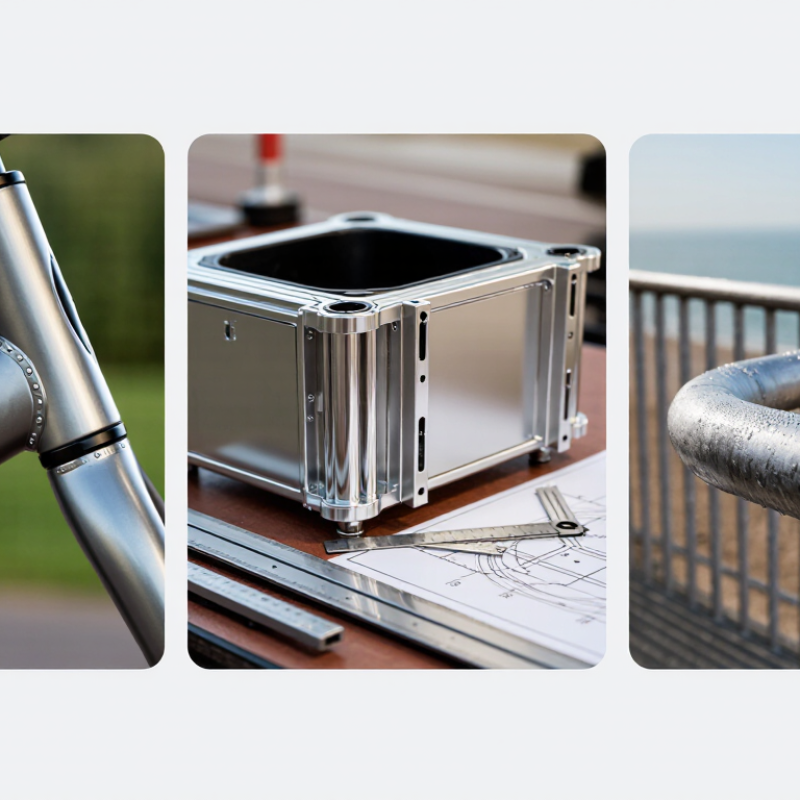
Define the component’s job before selecting an alloy. Record peak load, load direction, cycle count, service temperature, corrosion exposure, joining method, and allowable deflection. A thin bracket beside a vibrating motor faces different demands from a housing carrying a steady load. Be specific. “Strong enough” is not a measurable requirement.
The Aluminum Association’s Aluminum Design Manual lists minimum tensile strengths of about 262 MPa for 6061-T6 and 228 MPa for 5052-H32 in applicable product forms. Those figures help frame a comparison, but they are not design allowables. Product form and thickness matter. Check the material specification and the actual supplier’s certified values before sizing a part. I would not choose 6061-T6 on strength alone: its corrosion environment and joining process also need review.
Turn requirements into checks: calculate stress and deflection, assess fatigue where loads repeat, and test exposure where moisture or salt is present. Welding can reduce strength near a 6061-T6 joint, so use joint-specific data rather than assuming the parent-metal value applies. A detail that’s easy to miss. For a real part, a small prototype under representative load can reveal vibration, fit, or corrosion problems that a tidy spreadsheet overlooks. The test plan should match the service conditions, not just the workshop.
The first digit points to the main alloying element and typical properties. It is only a starting point; check the exact grade and temper.
1xxx alloys offer high electrical conductivity, while 3xxx alloys often suit formed sheet and heat-exchanger fins. 5xxx alloys are often considered for marine panels and welded tanks. Cast alloys can form complex housings.
Aluminum has a density near 2.70 g/cm³, compared with about 7.85 g/cm³ for steel. Weight matters. Actual part weight also depends on its shape and dimensions.
Typical 6061-T6 yield strength is about 276 MPa; 5052-H32 is around 193 MPa. These are screening figures, not design values. 5052 often suits damp settings, while 6061 balances strength and corrosion resistance for many outdoor structures.
3003 is often used for ducting and shallow panels. 5052 can handle more demanding bends. In T6 temper, 6061 is stronger but less forgiving at tight bends. Check the temper.
Some 2xxx and 7xxx alloys provide higher strength for demanding components. Joining and corrosion protection may need closer attention. I may be oversimplifying; confirm the actual grade and operating conditions.
Confirm the product form, dimensions, temper, order quantity, and delivery location. Ask for a material certificate showing composition and mechanical properties. A low price is not useful if the required temper is unavailable.
State the alloy, temper, dimensions, and applicable material standard. Check that the standard fits the product form and intended use. Lead times and local stock can change, so verify them before finalizing the design.
Choosing the right aluminum alloy begins with defining the component’s performance requirements, including its expected loads, operating environment, weight limits, and intended lifespan. Aluminum alloys are grouped into families with different characteristics and common applications, so understanding these differences helps narrow the options. Compare strength, weight, corrosion resistance, and formability together rather than focusing on a single property: an alloy that is strong may be less suitable if it is difficult to shape or must endure harsh conditions.
The manufacturing process and service environment also influence the best choice. Consider whether the component will be cast, machined, welded, or formed, and check that the selected alloy suits those methods. Finally, balance technical performance with cost, availability, and relevant material standards. A thoughtful Alloy And Aluminum selection helps meet practical needs while avoiding unnecessary expense or properties the component does not require.
