 Kangjian
Choosing China’s best Aluminum Casement window manufacturers requires more than comparing catalog prices. It requires evidence. The United Nations Environment Programme reports that buildings consume about 30% of global final energy and create roughly 26% of energy-related emissions. Window selection therefore affects comfort, cooling demand, and long-term operating costs.
Building-science expert Joseph Lstiburek states, “A window is a hole in a wall.” His simple observation remains highly relevant. A well-designed Aluminum Casement window needs more than a strong frame. It needs suitable glass, reliable seals, accurate hardware, thermal breaks, and careful installation. The U.S. Department of Energy’s Efficient Windows Collaborative also emphasizes whole-window performance, including U-factor, solar heat-gain coefficient, air leakage, and visible transmittance.
This guide examines Chinese manufacturers through practical evidence. We consider factory experience, extrusion quality, powder-coating systems, hardware sources, laboratory test reports, and export records. Relevant standards may include EN 14351-1, ASTM procedures, and AAMA/WDMA/CSA 101/I.S.2/A440, depending on the target market. Manufacturers should provide verifiable documentation, not attractive promises.
The uncomfortable truth is that no single company is best for every project. A coastal villa, a high-rise apartment, and a replacement window require different specifications. Buyers should inspect corner joints, drainage paths, gasket compression, and sample operation. Small details matter.
Market reports can describe growth, but they cannot prove manufacturing quality. Factory audits and independent testing remain essential. A low quotation may hide thinner profiles, weaker hardware, or unclear warranty terms. This comparison aims to make those differences visible, while admitting that supplier data can still be incomplete.
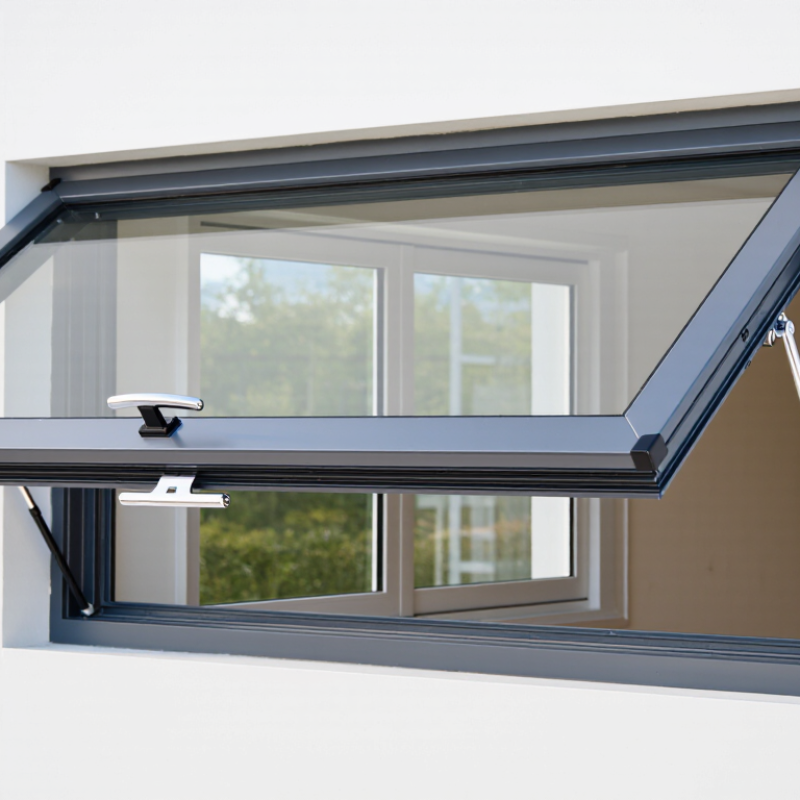
China Best Aluminum Casement Windows Manufacturers?
A leading aluminum casement window manufacturer proves performance, rather than relying on polished catalogs. The International Energy Agency reported in 2023 that buildings consume about 30% of global final energy. Window design therefore affects more than appearance. Look for thermal-break aluminum profiles, low-emissivity glass, and continuous weather seals. The U.S. Department of Energy notes that windows can represent 25–30% of household heating and cooling energy use. That figure makes U-value, air leakage, and installation quality practical purchasing concerns.
Tips: Request complete test reports, not isolated laboratory numbers. Check air infiltration, water resistance, wind-load performance, and thermal transmission. Ask whether testing covered the exact frame, glass, hardware, and dimensions you will order. Small changes can alter results. I once saw a strong profile perform poorly because the corner joint was rushed.
Experience also matters. A reliable Chinese manufacturer should explain alloy selection, powder-coating thickness, drainage paths, and hardware cycles in plain language. The coating should remain uniform around handles, corners, and drainage slots. Factory quality systems help, but they do not replace production records, sample inspections, and traceable batch numbers. The World Bank reports that China remains one of the world’s largest manufacturing economies, yet scale alone does not prove window expertise. Review engineering drawings, inspect a finished sample, and confirm packaging details before mass production. A manufacturer willing to discuss failed tests may be more credible than one claiming perfection.
Guangdong, especially Foshan, has dense extrusion, glass, machining, and hardware networks. Jiangsu and Zhejiang offer automated finishing and export experience. Shandong often supports larger-volume extrusion orders. Fujian suits project-based production, but quality can vary.
Extrusion mills produce aluminum profiles with controlled alloy and wall thickness. Window fabricators assemble frames, glass, gaskets, and hardware. Project suppliers may manage drawings, testing, packaging, and installation documents. Trading companies simplify communication, but technical control may be less visible.
Good design considers climate, wall structure, opening size, and installation habits. Thermal-break frames reduce heat transfer. Multi-point locks improve sash compression. Drainage channels direct rainwater away from frame corners. Small details matter.
Ask about extrusion accuracy, CNC cutting, corner joints, hardware slots, and drainage holes. Inspect gasket placement and reinforced frame connections. Check powder coating for bubbles, color differences, and surface defects. Bright light helps.
Double glazing can suit moderate climates and general residential use. Low-emissivity glass may reduce indoor solar heat. The correct choice depends on climate, orientation, noise, and building use. One option rarely fits every project.
Request recent tests for air leakage, water resistance, wind pressure, and repeated operation. Reports should match the proposed window system. Visual quality alone proves little. A blocked drainage hole may remain hidden.
Request the business license, factory address, capacity details, and recent export references. Use a live video tour when possible. Watch the extrusion area, coating line, glass workshop, and inspection table. Production photos are useful, but live evidence is stronger.
Confirm aluminum alloy, wall thickness, glazing, screens, gaskets, hardware, packaging, delivery terms, and warranty conditions. Compare every quotation line by line. Keep approved samples, signed specifications, and revision numbers together. Paperwork prevents confusion.
A trial order can reveal packing damage, color variation, and installation problems early. Inspect whether the sash opens smoothly without scraping. Independent pre-shipment inspection may help with important orders. No factory is perfect. I would still test first.
China has become an important source of aluminum casement windows, offering manufacturers with capabilities ranging from custom residential projects to large commercial developments. A leading supplier is defined by advanced production equipment, experienced engineering teams, stable material sourcing, precise fabrication, and the ability to provide customized profiles, glazing options, hardware, colors, and opening configurations. Major manufacturing regions often include coastal industrial centers with strong aluminum processing and export infrastructure, while suppliers may specialize in standard products, project-based solutions, or fully integrated design and production services.
The manufacturing process typically covers profile extrusion, thermal-break treatment, cutting, machining, assembly, glazing, and final inspection. Buyers should evaluate compliance with relevant quality standards, air and water tightness, wind-load resistance, thermal insulation, corrosion resistance, and operational durability. Certifications, testing records, sample quality, production capacity, communication efficiency, warranty terms, and after-sales support are also important selection factors. A reliable Chinese manufacturer should clearly explain specifications, maintain consistent quality, meet delivery commitments, and support transparent cooperation from initial design through installation.
