Why Choose Aluminum Machining for Your Project?
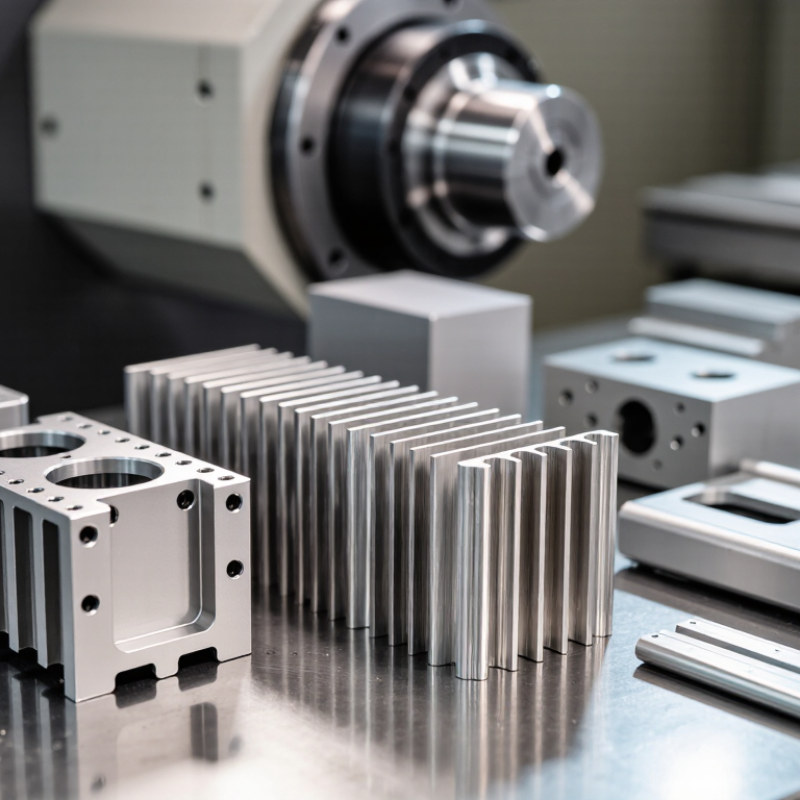
Aluminum Machining can produce lightweight, precise components for enclosures, brackets, heat sinks, and moving assemblies. Aluminum’s density is about one-third of steel’s, so a carefully designed part can reduce mass without sacrificing useful strength. It also conducts heat well and forms a protective oxide layer. These properties matter when a component must stay light, shed heat, or resist ordinary environmental exposure.
The U.S. Geological Survey’s Mineral Commodity Summaries 2024 estimates global primary aluminum production at roughly 70 million metric tons in 2023. That scale supports broad material availability, though it does not guarantee that every alloy or stock size is locally accessible. Metallurgist John A. S. Green’s published work on aluminum processing offers a useful principle, paraphrased here: “Choose the alloy and process together; neither works well in isolation.” Treat that as guidance, not a verbatim quotation. Alloy choice affects strength, chip formation, surface finish, and corrosion behavior.
In the shop, the difference can be tangible. A sharp cutter, a rigid setup, and controlled chip evacuation help prevent built-up material on the tool. Yet aluminum is not automatically easy to machine. Thin walls can vibrate, and heat can distort a small feature. That deserves attention. A lower part weight may be valuable, but only if the design respects tolerances, tool access, and production volume. This guide examines where Aluminum Machining fits, what trade-offs to expect, and which questions to ask before choosing a process.
Aluminum’s 2.70 g/cm³ Density Supports Lightweight Part Design
Aluminum has a density of about 2.70 g/cm³, making it a practical choice when part weight matters.
For the same volume, it weighs roughly one-third as much as steel. That difference can reduce the load on moving assemblies, supports, or handheld equipment. Picture a machined bracket mounted on a moving arm: removing unnecessary mass may help the assembly respond with less effort. Small changes add up.
But low density alone does not make a part suitable. Aluminum is less stiff than steel, so a thin panel may flex under load. Alloy, geometry, and machining conditions all affect the result. Keep load paths in mind, and check deflection against the actual use case. It is easy to chase a low weight target and overlook vibration or fit. That deserves a second look.
Tips: Estimate mass from the part’s volume and a density of 2.70 g/cm³, then compare it with your current material. Use ribs or thoughtful section shapes where stiffness matters, rather than adding thickness everywhere. Leave room for clamping and tool access. A simple prototype can reveal awkward flex or assembly issues before the design is finalized.
How 6061-T6 Delivers About 310 MPa Tensile Strength
6061-T6 is widely used when a machined part needs a useful balance of strength, weight, and machinability. Published property tables, including ASM Handbook, Volume 2, place its typical ultimate tensile strength near 310 MPa, or about 45 ksi. That is a reference value, not a promise for every part.
The detail matters. ASTM B209 and ASTM B221 specify mechanical requirements by product form and dimensions, so sheet, plate, and extrusion values may differ. Check the material certificate and the applicable specification before using 310 MPa in a design calculation.
A machined pocket can also leave a thin wall that bends or vibrates, even when the raw alloy has adequate tensile strength. Numbers meet geometry here.
In practice, 6061-T6 cuts cleanly with sharp tooling, and its moderate density helps keep components lighter than steel alternatives. But aggressive cuts can leave burrs, heat, or a poor finish; small radii and narrow slots deserve extra attention. I would not size a load-bearing feature from tensile strength alone. Yield strength, fatigue, fastener loads, and stress concentrations can control the result. The strength figure is useful. It is not the whole story.
How Aluminum’s 205 W/(m·K) Thermal Conductivity Aids Heat Management
A machined aluminum part can move heat away from a warm contact point quickly. A commonly cited thermal conductivity for aluminum is about 205 W/(m·K), though the exact value depends on alloy and temperature. Some alloys conduct less. For designers, that number is useful, but it is not a cooling guarantee.
Picture a compact motor housing with a hot bearing seat. Aluminum can spread heat through the housing, reducing concentrated hot spots when the part has enough material and a clear path for heat flow. A thin wall may conduct heat well yet still offer little capacity to absorb it. Not by itself. The heat must also leave the component through airflow, a mounting surface, or another cooling route.
Machining helps create flat interfaces, mounting features, and channels that support this thermal path. In practice, surface contact matters: a small gap or uneven mating face can hinder heat transfer between parts. Designers should also account for alloy choice, wall thickness, operating temperature, and nearby components. A conductivity figure from a material table is a starting point, not a prediction of real performance. I would check the actual alloy data and test a representative assembly, since airflow and contact pressure can change the result more than expected.
Why Choose Aluminum Machining for Your Project?
Thermal Conductivity of Common Engineering Materials
Aluminum’s representative thermal conductivity of 205 W/(m·K) helps transfer heat away from components, making it useful for heat sinks, housings, and other parts where heat management matters. Actual conductivity varies by alloy, material grade, and temperature, and overall cooling also depends on part geometry and operating conditions.
CNC Machining Can Produce Aluminum Parts to ±0.01 mm Tolerances
CNC machining can produce aluminum parts with tolerances of ±0.01 mm when the geometry, setup, and inspection plan support that target. It is a tight tolerance, not an automatic promise. A rigid fixture, sharp cutting tools, and controlled finishing passes help limit movement and tool deflection. Thin walls can still flex under cutting forces, while temperature changes can affect measurements. Aluminum is easy to machine, but it is not immune to these issues. A pocket that looks simple on a drawing may need careful support during machining.
Specify critical dimensions and datum surfaces clearly, so the machinist knows what must align. For example, a bearing bore may need closer control than an outer edge with no mating function. Inspecting parts with calibrated micrometers or a coordinate measuring machine can verify results, especially when measurements are taken at a stable temperature. Even so, ±0.01 mm everywhere is often unnecessary. Tighter tolerances can increase machining time and inspection effort without improving how the part works. A useful design review asks which surfaces truly need that precision, and why.
Where Aluminum Machining Serves Aerospace, Automotive, and Electronics
Why Choose Aluminum Machining for Your Project?
Where Aluminum Machining Serves Aerospace, Automotive, and Electronics
Aluminum machining suits parts that need low weight, accurate dimensions, and clean surface finishes. In aerospace, it is used for brackets, housings, and fluid-system components. Airbus’s 2024 Global Market Forecast projects 42,430 aircraft deliveries from 2024 to 2043, pointing to sustained demand for carefully engineered parts. Aluminum is not right for every location; heat, fatigue, and wear still shape material choices. Fit matters.
Automotive applications include motor housings, battery enclosures, and lightweight structural parts. The International Energy Agency reported nearly 14 million electric-car sales worldwide in 2023. That growth puts attention on compact components that manage heat and protect electrical systems. In electronics, machined aluminum appears in heat sinks, instrument cases, and mounting plates. SEMI’s 2024 forecast estimated semiconductor manufacturing equipment sales at $109 billion, reflecting the scale of precision production behind electronic devices. These figures do not prove every application needs machining, but they show why consistent, custom-fit components matter.
Tips: Specify the alloy, tolerances, and operating temperatures before production. Check thin walls for distortion, and review chip removal around deep pockets. A polished finish can help, but it may add cost. Not always worth it.
Conclusion
Aluminum Machining is a practical choice for projects that need lightweight, durable, and precisely manufactured parts. With a density of about 2.70 g/cm³, aluminum helps reduce component weight while remaining suitable for many demanding applications. The 6061-T6 alloy offers tensile strength of approximately 310 MPa, providing a useful balance of strength and machinability. Aluminum also conducts heat at around 205 W/(m·K), making it valuable for components that need to transfer or dissipate heat effectively.
Modern CNC machining can produce aluminum parts to tolerances as close as ±0.01 mm, depending on the part design and production requirements. This precision, combined with aluminum’s low weight, strength, and thermal performance, makes it a versatile option across aerospace, automotive, and electronics projects. From structural components to housings and heat-management parts, aluminum machining supports designs where accurate dimensions and efficient performance matter.
 Kangjian